
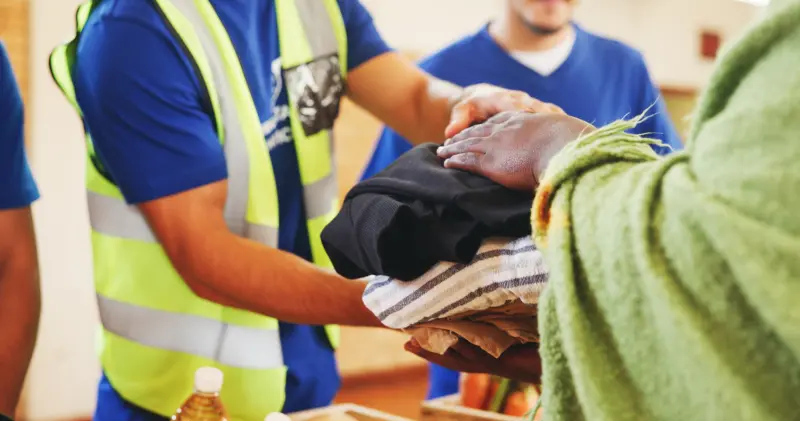
Finding the right way to support someone can be difficult, and you may be limited in the support you can provide. Some homeless people may not want any assistance, either. However, knowing how to offer appropriate help when it’s needed can make a huge difference to someone who’s homeless.
Depending on the situation and your relationship with the person, support could mean offering them a place to stay, providing them with basic essentials like food and warm clothing, or helping them access supported housing and arrange benefits.
In this guide, we’ll look at how you can help a homeless family member, or support someone in your community who is sleeping rough.
Looking for supported housing right now? We can help you find it quickly.
- 1. Go to our supported living search page and enter your location.
- 2. Make sure that you’ve selected Vacant, so that we’ll show you properties with current availability.
- 3. Click Search.
- 4. Contact your chosen accommodation, and explain the situation – they should be able to advise you on the next steps.
What does it mean to be homeless?
When most people hear the word homeless, they think of someone who’s sleeping on the street. And while rough sleepers are usually homeless, a person doesn’t need to be sleeping outside to be classed as homeless.
Someone might be homeless if they:
- Have no accommodation available – this may include people who are sleeping rough.
- Are “sofa surfing” – temporarily staying with family or friends because they don’t have a home of their own.
- Are in short-term accommodation – staying in a B&B, women’s refuge, night shelter, or hostel.
- Have a home, but can’t access it – for example, if their partner or landlord has changed the locks.
- Are at risk of violence or abuse – they may need to leave their legal home.
- Can’t park or moor their mobile home or houseboat – if they usually live in a mobile home or houseboat, and have no legal place to put it, they may be classed as homeless.
Whatever their current sleeping situation, all of these people could be classed as homeless. As a family member, friend, or neighbour, you might be anxious to know how you can support them.
How do you help a homeless family member or friend?
If you know someone who is homeless, you might want to provide support – but you may feel unsure of what’s appropriate, or how you can help.
Be guided by their wishes.
Ask them what they need or want from you – they may not feel ready to accept help yet, or they might be desperate for something simple, like warm clothes.
Depending on your circumstances, you may be able to provide more practical help as well. If you have a spare room, you could offer a place to stay, or if you have lots of available time, you could help them look for a job or housing.
Be realistic about your boundaries and limitations.
It’s important to be honest about what you can provide. Don’t promise resources or time that you can’t commit to long-term.
Let’s look in more detail at how you can help a homeless family member or friend.
Offering a place to stay
You might have a spare room, or space on your sofa, where your family member or friend could stay for a little while.
However, this isn’t always possible. It’s important to be realistic about your relationship and situation before offering a place to stay.
You might know that you can’t offer a place to stay. This could be due to:
- Lack of space: You might not have room in your home.
- Relationship dynamics: Sharing a home can put strain on the healthiest of relationships – if there are any pre-existing tensions, living together can be very difficult.
- Safety issues: For example, if your loved one is actively using drugs, and you have small children, it might not be safe to allow them to move in with you.
It’s okay to say no if you can’t provide housing for a loved one. It doesn’t mean that you don’t love them or want to help them. There are other ways to provide support.
Helping them access essentials
As a friend or family member, you can help your loved one get access to essentials and services, so they can be as comfortable as possible.
Whether they’re sleeping rough, sofa surfing, or staying in temporary accommodation, they’ll need some essentials, including:
- Food
- Toiletries
- Clothing (especially warm clothing)
- Shoes
- A sleeping bag or bedding
They’ll also probably need a smartphone and access to the internet, so they can keep in touch with loved ones, and apply for jobs, housing, and benefits.
Depending on where they’re staying and the facilities available, they may also need somewhere to wash their clothes and bedding, somewhere to have a shower or bath, and somewhere safe to leave valuable belongings.
If they have pets, they might need someone to look after them for a while – especially if they’re staying in a shelter or property that doesn’t allow animals.
Supporting them to find a job or access benefits
Your loved one may not know how to start applying for benefits or looking for a job. They might feel overwhelmed at the thought – especially knowing that they don’t have a fixed address to include on a CV or application form.
You don’t have to know exactly how the benefits system works yourself, or be a job-hunting expert.
You could offer support by:
- Providing transport: Driving them to the Jobcentre or job interviews.
- Sharing your computer or providing internet access: Offering the use of your smartphone or laptop so they can contact the Jobcentre, write a CV, or apply for jobs.
- Keeping important documents safe: Holding onto important records, such as their birth certificate or passport, so they don’t need to worry about losing them.
- Providing an address: Letting them use your address as a “Care of” address, so they can apply for jobs and Universal Credit.
- Helping with the job search: Looking out for suitable jobs, and encouraging them to apply.
Supporting them to look for housing
For most homeless people, finding stable housing is the number one goal.
As a supportive friend or family member, you can help your loved one look for appropriate housing.
This could be rental properties in the community – sites like Rightmove and Facebook Marketplace could be useful here. Support them by accompanying them to viewings, helping them to plan a budget, and looking for the essentials they’ll need in their new home.
However, it’s important to be realistic. Some people might not be able to live independently, especially if they’re dealing with mental illness, substance use, or other unresolved issues that caused them to lose their previous home.
If your loved one needs some extra help to stay safe and well, supported housing might be a good choice for them.
In a supported living scheme, residents are encouraged to be as independent as possible – but they still have access to professional support when they need it. They might get help with learning life skills, medication management, or coping with money. They may also be entitled to help with paying for supported living.
Find Your Room can help you find the right supported living property for your loved one.
You can search for available properties in your area, and filter by availability to make sure that the accommodation listed has space right now.
Providing advice and emotional support
Your loved one is probably going through the worst time of their life. Even if you can’t provide practical resources or help, or they aren’t ready to accept assistance, they might need a friendly listening ear.
Where possible, try and spend time with your friend or relative. Listen to their worries and experiences, and acknowledge what they’re going through.
Simply knowing that someone cares about them can make a big difference.
How do I help a homeless person in my community?
You may have noticed someone in your area who’s sleeping rough, or have an acquaintance who doesn’t have anywhere to live. You might not be able to offer as much help as you would for a friend or relative, but it’s natural to want to support a member of your community who’s having a tough time.
You can help someone who’s homeless by offering basic essentials, as well as money if you feel it’s appropriate. It’s also important to acknowledge them and talk to them – many homeless people say that they feel invisible when people pass by and ignore them.
You can also contact StreetLink to help connect people with support services.
Call emergency services if necessary
If you see that a homeless person is experiencing an emergency, call 999 immediately.
People experiencing homelessness are very likely to be in poor health:
- Over 82% of homeless people report that they have a mental illness
- 81% of homeless people say that they have at least one physical health condition
- Homeless people are four times more likely to use A&E services than the general population
- The average life expectancy of a homeless person is between 44 and 46
Homeless people are encouraged to register at a local GP, even if they don’t have a permanent address. Homeless health charity Groundswell offers downloadable Right to Healthcare cards that may help people feel confident to ask to register with a GP.
Support homeless charities
Donating to or volunteering with homeless charities is one way to support people who are sleeping rough or in unstable housing situations.
Many local and national charities work to make sure that homeless people have the resources they need. They might provide practical resources for people, give advice, or campaign for policy change.
Some organisations focus solely on rough sleepers, whereas others also support people who are at risk of losing their homes or living in temporary accommodation.
Some of the most well-known national homeless charities are Shelter and Crisis.
Depending on your location, there may also be local homeless charities that work with people in your area.
Helping homeless people get back into housing
If you’re looking for housing for a homeless family member or friend, you should consider their needs and why they became homeless.
Did they lose their home simply due to financial reasons – for example, losing their job or rents increasing?
If so, the priority is to get some income and find a rental room or property. Your first step could be to help them register with the Jobcentre and apply for Universal Credit.
Are they dealing with mental illness, learning disabilities, substance use, excessive alcohol consumption, or other concerns that contributed to them losing their home?
If so, the priority is to find a living situation that can help them manage their health, stay safe, and avoid relapsing in future. Supported housing could be the ideal solution.
Find Your Room can help you find supported housing for a friend or family member. Simply go to our supported living search, enter your location, and search by availability.